
A Note from Penny: We talk a lot in advancement about “understanding our audience.” So, I’m stepping away from the keyboard for this post and handing the mic over to my 23-year-old daughter. If you want to know how Gen Z actually views your school’s marketing campaigns, stop reading think-tank reports and read this instead.
by Julianna Rogers
Reading headlines about my generation, Generation Z, it can often feel as though everyone expects us to be an outlier. Whether it’s our spending habits, our political beliefs, or our general way of life and outlook, marketing think tanks seem absolutely convinced that Gen Z is, so to speak, “not like other girls”, and therefore requires a more… eccentric approach. They’re not totally wrong, honestly – we’re the first to have grown up with smartphones and the internet, after all. I know for certain that my attention span is positively shot thanks to the constant sensory input I receive from my phone. At the end of the day, though, even if our brains did end up being wired a bit differently, we’re really not so dissimilar from the generations that came before us. There’s nothing inherently bad about wanting to be innovative in your marketing, but there’s a very thin line between successfully reaching a younger audience and horribly bungling your attempt. Worst case scenario, you risk coming across as not only cringeworthy and unappealing, but condescending. So, today I thought I’d give some of my personal marketing turn-offs, as well as some case studies of what not to do when trying to reach out to your Gen Z alumni.
Don’t be inauthentic in your marketing
Specifically, don’t force yourselves to appeal to younger demographics in ways that seem unnatural. The average twenty-something has an unfathomable amount of advertising thrown at them on a daily basis – that is to say, we can tell when you’re trying too hard. If participation in a social media trend fits with your brand’s voice and feels natural, by all means, go for it. Otherwise, however, you risk seeming as though you’re trying too hard to pander to an audience that you not only do not understand, but look down upon.
Take, for example, the rise of ‘sassy’ corporate Twitter (Now X) accounts. If I remember correctly, it was Wendy’s who initially popularized the ‘unhinged social media intern’ persona, and it spread like wildfire.
The thing is, though, all of the corporate accounts that hopped on the bandwagon completely misunderstood that it was the subversiveness that made the Wendy’s Twitter account popular in the first place – and if everyone is doing something, it naturally fails to be subversive.

Twitter users quickly grew tired of the farce unfolding before their eyes, of course, and did what they do best: make the whole thing into a joke, with the brands as the butt of it.
Don’t forsake your institutional legitimacy
This one might be more of a personal opinion, but I don’t think there’s anything wrong with being the somewhat serious adult in the room. In today’s world especially, with each news cycle getting more and more ridiculous, institutions – especially educational ones – that take themselves seriously are refreshing. At least in my case, I feel a lot more comfortable lending my meager support to an earnest, grounded place of learning. Leaning into your place as a school doesn’t have to mean that you’ll have to be dour or inaccessible, either, but an organization that doesn’t recognize its own importance and purpose isn’t one worth respecting, nor is it one that someone my age would prioritize engaging with or supporting financially. Younger people most likely don’t have the means to make major donations, so when we do donate, it’s a strong signal that we genuinely care. Basically, make it worth our while
Don’t worry too much about ‘getting it’ or ‘being cool’
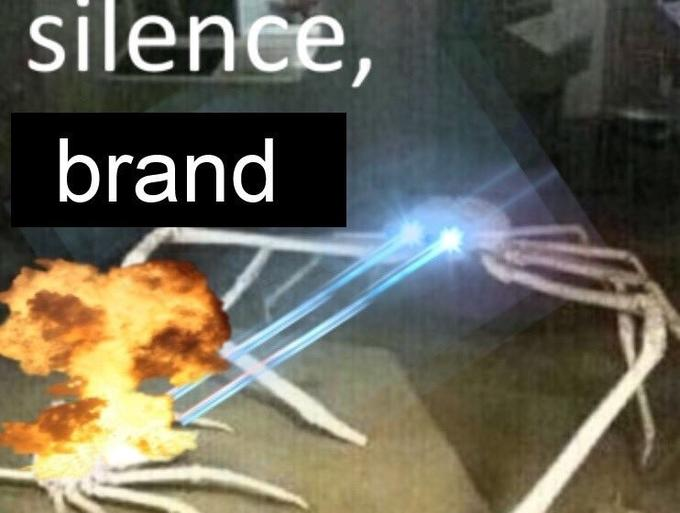
The most important thing to know about any trend or meme is this:
if it’s reached you, it’s already past its prime.

As hard as it may be to accept on a personal level, all of us past the age of roughly 22 are going to be outsiders to the inside jokes of younger people. It’s just not our space to inhabit anymore – but there’s nothing wrong with that at all.
Social media platforms, particularly those that teenagers tend to use, are often perceived as ‘their’ spaces, and so any invasion of that space, including the adoption of trends for marketing purposes, is going to be met with disdain.
Additionally, the fact that we even know about these memes and trends means that they’ve breached containment from their ‘cool’ original users, so anything you know about is surely outdated or past its prime.
So… what exactly?
To put it as simply as possible: If you’re trying to reach out to your Gen Z alumni and you’re thinking of participating in a trend, if you don’t fully get it, don’t do it. Your young alums might be young, of course, but they’re not from an entirely different planet. If you want our attention, make your message worth our time, and reach out to us on equal terms – you might just be pleasantly surprised at the response you get.
The author, Julianna Rogers, is a graduate of Ravenscroft School (Raleigh, N.C.), and a summa cum laude graduate of Appalachian State University with a B.S. in Political Science. She is pursuing her MSc in International Relations at the London School of Economics.
Leave a Reply